
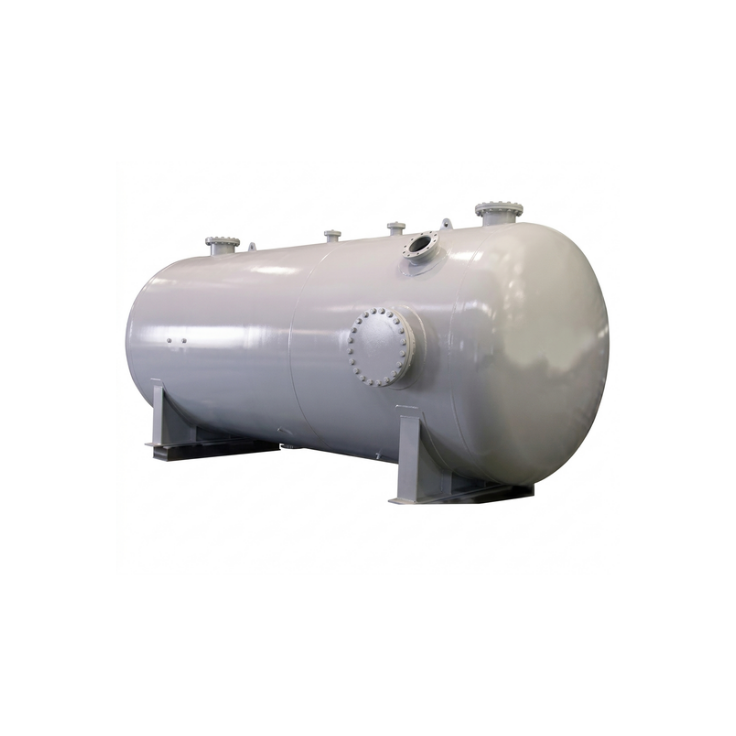
Pressure Vessels: Engineering, Safety Standards, and Industrial Applications
Pressure vessels are specialized closed containers designed to hold gases or liquids at a pressure significantly higher or lower than the ambient atmospheric pressure. Because they operate under extreme internal forces, the design, fabrication, and maintenance of pressure vessels require uncompromising engineering precision and strict compliance with safety regulations.
Pressure vessels play a critical role across heavy industries, serving as core processing units rather than simple storage units:
Chemical Reaction & Processing: They host high-pressure chemical reactions, fluid separation, and distillation processes without risk of leakage.
Energy & Steam Generation: In power plants and thermal facilities, pressure vessels act as boilers and steam drums to store and transfer high-enthalpy energy safely.
Hazardous Fluid Storage: They safely contain volatile organic compounds (VOCs), liquefied petroleum gas (LPG), and compressed industrial gases under high pressure.
The structural reliability of a pressure vessel depends heavily on selecting the correct materials and geometric shapes:
Pressure vessels are typically cylindrical or spherical. Spherical vessels offer the most efficient shape for managing high internal pressure equally in all directions, whereas cylindrical vessels with hemispherical or dish-shaped ends provide an optimal balance between pressure handling and ease of fabrication.
Materials are selected based on process pressure, operating temperature, and chemical reactivity:
Carbon Steel: Widely used for standard pressure applications due to its strength and structural rigidity.
Stainless Steel (304/316 Grade): Essential for corrosive chemical environments, pharmaceutical applications, and low-temperature service.
Alloy Steels: Applied in high-temperature environments to resist thermal stress and deformation.
A pressure vessel failure can result in catastrophic industrial accidents. Therefore, international manufacturing codes like the ASME Section VIII govern every stage of production:
Precision Welding & Fabrication: Shell plates and dished ends are joined using automated submerged arc welding (SAW) or TIG welding to eliminate internal defects.
Non-Destructive Testing (NDT): Manufacturers perform 100% Radiographic Testing (RT) and Ultrasonic Testing (UT) on critical weld seams to identify sub-surface flaws.
Hydrostatic Pressure Testing: Before dispatch, every vessel is filled with liquid and pressurized up to 1.3 to 1.5 times its design pressure to verify structural safety and leak-proof performance.
To maintain operational control and prevent dangerous over-pressurization, every pressure vessel is integrated with critical safety hardware:
Pressure Relief Valves (PRV): Automatically release excess gas or fluid if internal pressure exceeds safe thresholds.
Pressure Gauges & Transmitters: Deliver real-time pressure readings to plant automation systems.
Rupture Discs: Serve as a secondary safety mechanism designed to burst under extreme pressure surges to protect the primary structure.