
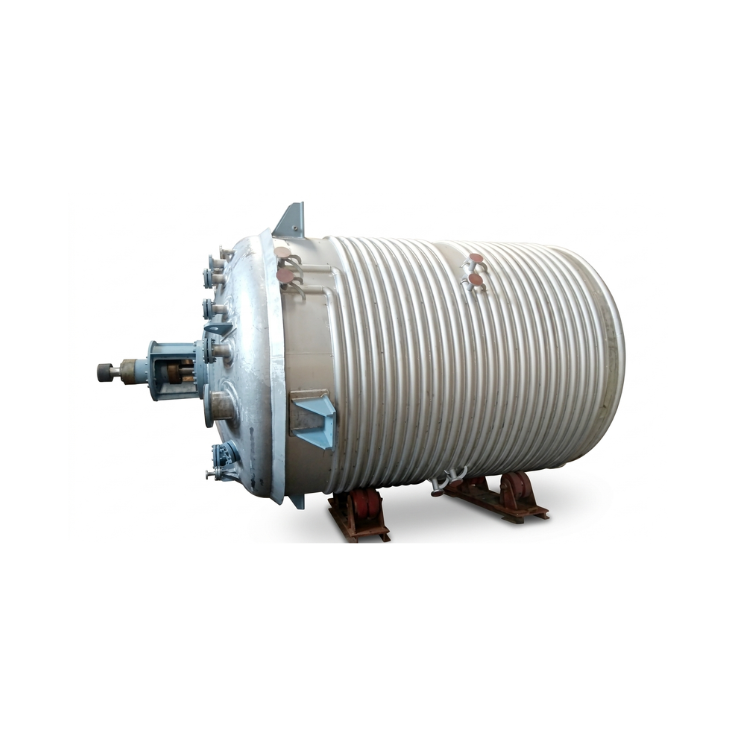
Industrial Chemical Reactors: Engineering Excellence, Types, and Process Applications
Industrial chemical reactors are the central processing units of chemical, pharmaceutical, petrochemical, and food processing facilities. Unlike standard storage vessels, chemical reactors are dynamic containment units engineered to facilitate, control, and accelerate complex chemical reactions under specific temperatures, pressures, and flow conditions. Achieving optimal yield and operational safety requires rigorous metallurgical selection and precise mechanical design.
A chemical reactor provides a controlled environment to transform raw material inputs into high-value chemical products. Key functions include:
Thermal Management: Efficiently transferring heat into endothermic reactions or removing heat from highly exothermic reactions to prevent thermal runaway.
Homogeneous Blending & Agitation: Ensuring complete mixing of liquid, gas, or solid phases to maximize molecular contact and reaction rates.
Controlled Reaction Dynamics: Maintaining precise operating pressures and residence times to yield pure product profiles while minimizing unwanted byproducts.
Different processing requirements necessitate specific reactor configurations based on batch size, fluid viscosity, and reaction kinetics:
Widely utilized in pharmaceuticals and specialty chemical manufacturing. The process fluid is contained in an inner vessel while a cooling or heating medium (such as steam, thermal oil, or chilled water) flows through an external jacket or limpet coil welded to the shell.
Ideal for continuous liquid-phase reactions. Ingredients flow continuously into a well-agitated vessel while an equivalent stream of reacted mixture is drawn off, maintaining a steady-state process environment.
Designed primarily for high-volume, continuous gas or liquid reactions. Reactants travel through a network of tubes at high velocities, offering superior heat transfer and consistent conversion rates along the tube length.
Because reactors frequently handle aggressive acids, solvents, and high operating pressures, material selection directly influences durability and safety:
High-Grade Metallurgy: Fabricated using SS 304, SS 316, SS 316L, or specialized nickel alloys (Hastelloy) to resist severe chemical corrosion and oxidation.
Precision Surface Finishing: Internal walls are mirror-polished or electro-polished to prevent product buildup, cross-contamination, and bacterial growth in sanitary applications.
Rigorous Quality Testing: Fabrication adheres to international standards such as ASME codes. Weld seams undergo 100% Non-Destructive Testing (NDT), including dye penetrant, radiography, and high-pressure hydrostatic testing.
Maintaining process control in chemical reactors requires integrated safety hardware:
Variable Speed Agitators: Customized impellers (anchor, turbine, or pitch blade) engineered for optimum fluid circulation based on viscosity.
Overpressure Relief Devices: Rupture discs and safety relief valves calibrated to relieve sudden pressure spikes instantly.
Automated Sensor Arrays: Digital temperature, pressure, and pH sensors linked to SCADA or PLC systems for real-time monitoring and safety cutoffs.